November 2026
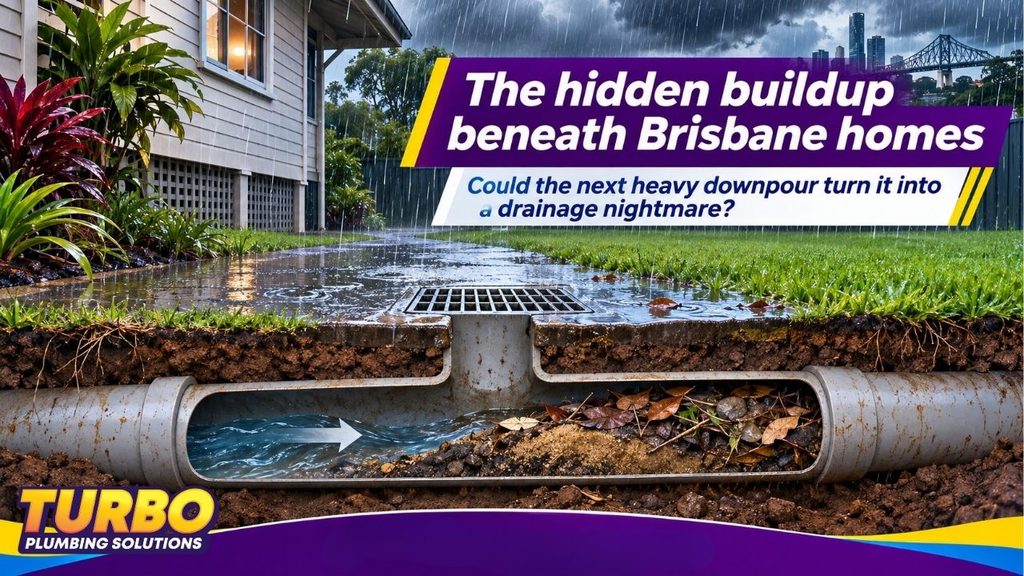
The hidden buildup beneath Brisbane homes that could turn the next heavy downpour into a drainage nightmare.
Your backyard looks perfectly normal.
The grass is green. The gutters are clear. The stormwater grates are sitting exactly where they should be.
Everything seems fine.
But underneath your property, something could be quietly building up.
A little dirt.
Some sand.
A handful of leaves.
Nothing particularly alarming.
Until those small amounts of debris start collecting inside your stormwater pipes.
Week after week. Month after month.
Slowly taking up space where rainwater is supposed to flow.
And the unsettling part?
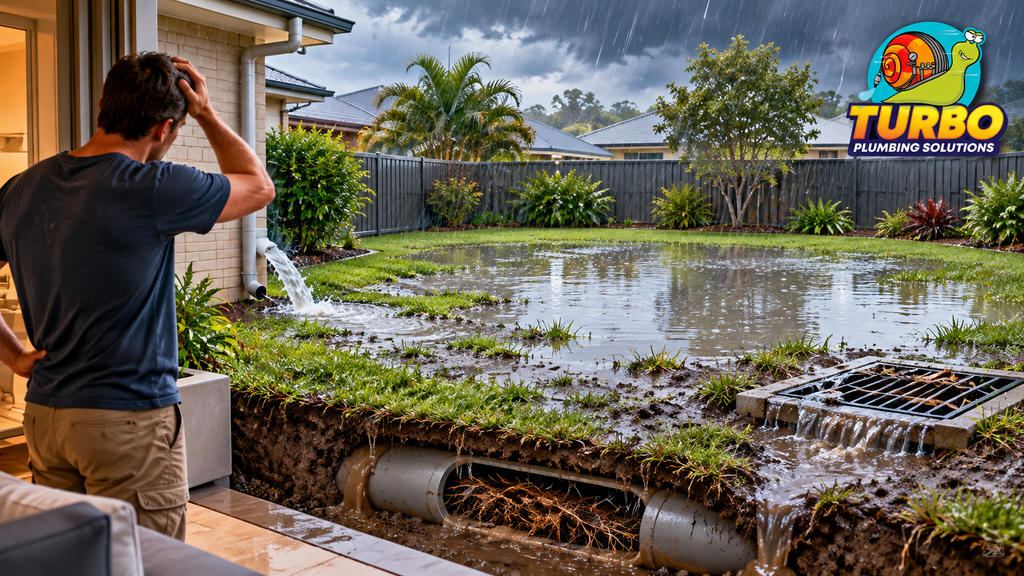
You might not notice anything is wrong until Brisbane’s next big downpour.
As November brings warmer weather and the possibility of heavy summer storms, there’s one underground plumbing problem worth paying attention to.
Stormwater sediment buildup.
It doesn’t make much noise. It doesn’t always produce a smell. And unlike a leaking tap, it won’t necessarily give you an obvious warning.
But when enough sediment accumulates, your drainage system can struggle when you need it most.
1. The Problem That’s Hiding in Plain Sight
When it rains, water doesn’t travel through your stormwater system completely clean.
As rainwater moves across roofs, driveways, pathways and gardens, it can carry all sorts of material with it.
Sand.
Soil.
Leaves.
Small stones.
Organic debris.
Some of this material gets caught by grates, pits and other drainage components.
But smaller particles can continue travelling through the system.
Over time, sediment may settle in areas where water moves more slowly.
This can happen inside stormwater pits, along the bottom of underground pipes or in sections where drainage conditions aren’t ideal.
At first, the buildup might be insignificant.
But if more material continues entering the system than the water can carry away, deposits can gradually accumulate.
And the more space sediment occupies, the less room there may be for stormwater to move freely.
The result can be a drainage system that appears perfectly functional during light rain but struggles during a heavier storm.
2. How Does Dirt Even Get Inside Underground Pipes?
It’s a fair question.
If stormwater pipes are buried underground, shouldn’t they be protected from dirt and debris?
Not entirely.
Stormwater systems are designed to collect runoff from outdoor surfaces.
And outdoor runoff naturally carries sediment.
Your Driveway Could Be Contributing
When rain washes across driveways and paved areas, it can carry accumulated dust, sand and loose material towards nearby drains.
This is especially noticeable after dry periods when debris has had time to collect.
Your Garden Might Be Sending Soil Underground
Heavy rainfall can wash loose soil and mulch out of garden beds.
If that material reaches a stormwater inlet, some of it may enter the drainage system.
Properties with exposed soil, sloping gardens or areas affected by erosion may be particularly vulnerable.
Leaves Don’t Always Stay on the Surface
Leaves and organic debris can collect around outdoor grates.
Smaller pieces may pass through openings and become trapped further inside the drainage network.
As material accumulates, it can catch additional debris and contribute to restrictions.
Damaged Pipes Can Allow Material to Enter
In some cases, cracked pipes, separated joints or other defects may allow surrounding soil to enter underground drainage.
This is different from sediment simply washing into a stormwater inlet.
And if the pipe itself is damaged, cleaning out the dirt may not resolve the underlying problem.
That’s why understanding where the sediment is coming from matters.
3. The Slow Buildup That Nobody Notices
Here’s what makes sediment buildup particularly frustrating.
It doesn’t necessarily stop your stormwater system from working overnight.
Instead, drainage performance may deteriorate gradually.
During light rain, water might still flow through the pipe without any obvious issues.
A small amount of sed
It’s raining outside.
The temperature has dropped, the backyard is getting soaked and you’re enjoying a quiet afternoon at home.
Then you walk into the bathroom.
And something smells… off.
You check the toilet. Nothing unusual.
You check the bin. All good.
Then you notice the smell seems to be coming from your shower drain.
Strange, considering everything was perfectly fine yesterday.
So what’s going on?
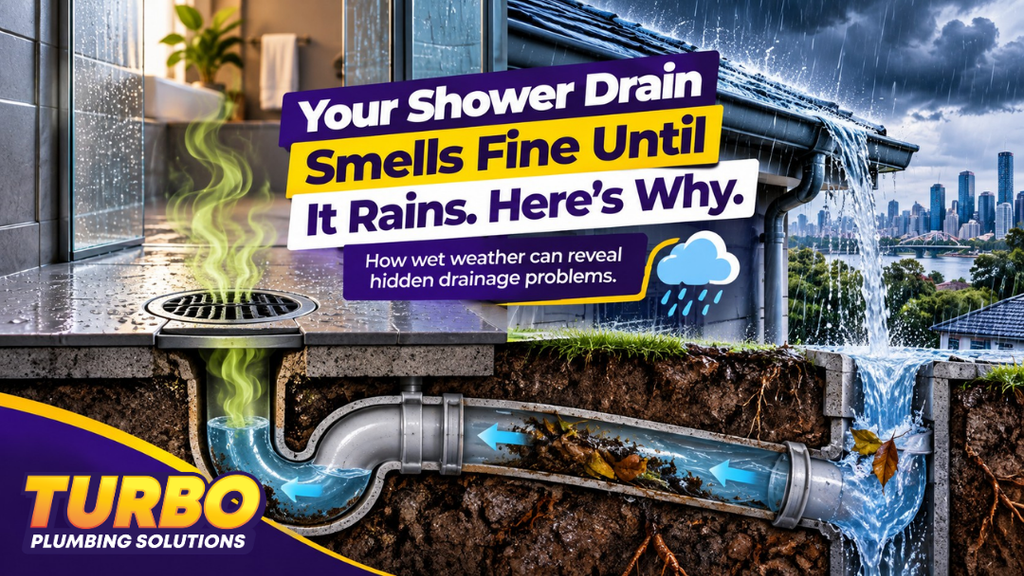
Can heavy rain actually make your shower drain smell?
The short answer is yes, sometimes. But the rain itself isn’t necessarily the problem.
In some cases, wet weather can expose drainage issues that have been developing underground for quite some time.
And with Brisbane’s storm season approaching, this is something worth understanding.
First, Why Would a Shower Drain Smell in the First Place?
Before blaming the weather, it helps to understand how your bathroom drainage works.
Your shower connects to a wastewater drainage system that carries used water away from your home.
That system also contains gases produced by wastewater and organic material.
Fortunately, your plumbing is designed to prevent those gases from entering your living spaces.
One important part of that protection is a water seal.
Most showers have a plumbing trap that holds a small amount of water.
This water acts as a barrier between your bathroom and gases inside the drainage system.
When everything is working correctly, you shouldn’t notice sewer odours coming through the drain.
But when something interferes with that barrier, or when another drainage problem develops, unpleasant smells can become noticeable.
And sometimes, rainy weather is when you first discover the issue.
1. Your Shower’s Water Seal Might Not Be Doing Its Job
Let’s start with one of the simpler explanations.
Your shower’s plumbing trap is designed to retain water.
That water helps prevent sewer gases from travelling back into the bathroom.
But what happens when the water seal is lost?
Gases may be able to escape through the drain.
This can happen for several reasons.
A shower that hasn’t been used for an extended period may have a trap that has partially or completely dried out.
In other situations, pressure changes within the drainage system may contribute to water being drawn out of the trap.
And if the trap or its installation is defective, it might not maintain an effective seal.
Here’s the important part: Rain doesn’t automatically empty your shower trap.
However, changes in drainage conditions during wet weather may make an existing problem more noticeable.
If you have a rarely used guest bathroom, running water into the shower drain may help restore a dried water seal.
But if the smell returns repeatedly, further investigation may be needed.
2. There Could Be a Partial Blockage Underground
Not every blocked drain announces itself with a dramatic overflow.
Sometimes, the warning signs are much quieter.
A shower might drain a little slower than usual.
You might hear occasional gurgling.
Or an unpleasant smell might appear and disappear without an obvious explanation.
Over time, hair, soap residue and other debris can accumulate inside drainage pipes.
Further along the system, tree roots or damaged pipework may also restrict wastewater flow.
When drainage is restricted, wastewater and organic material can accumulate, contributing to unpleasant odours.
Heavy rainfall does not normally enter a correctly functioning sanitary drainage system through stormwater pipes.
However, where there are defects, unwanted connections or broader sewer network problems, wet weather can sometimes coincide with changes in drainage behaviour.
If the smell is accompanied by slow drainage or gurgling, it is worth checking whether a blockage is developing.
3. Your Plumbing Vent Might Have a Problem
Here is a part of your plumbing system most homeowners never think about.
Your drainage vents.
Plumbing vents help manage air pressure within the drainage system and allow gases to discharge safely outside.
They play an important role in keeping wastewater flowing properly and maintaining the water seals in plumbing traps.
But if a vent is blocked, damaged or incorrectly installed, pressure problems can occur.
You might notice:
- Gurgling sounds after flushing the toilet
- Water levels changing in plumbing traps
- Unusual smells around bathroom drains
- Slow or inconsistent drainage
Debris, nesting material or other obstructions can sometimes affect vent openings.
And while rain is not necessarily the cause of the problem, changes in weather and drainage conditions may make existing venting issues more noticeable.
A licensed plumber can assess whether the venting system is contributing to the problem.
4. The Smell Might Not Actually Be Coming From the Shower
This one catches people out.
You walk into the bathroom, notice an unpleasant smell and immediately assume the shower drain is responsible.
But bathrooms contain several possible sources of odours.
Floor wastes.
Basins.
Toilets.
Wastewater connections.
Even moisture trapped in grout, seals or poorly ventilated areas.
Sometimes the smell is caused by organic buildup around the shower waste opening rather than gases coming from the sewer.
In other cases, a nearby floor waste may have lost its water seal.
And if there is a plumbing defect behind a wall or underneath the floor, the smell may simply be more noticeable near the shower.
That’s why identifying the actual source matters.
The strongest smell isn’t always coming from the pipe with the problem.
5. Heavy Rain Could Be Exposing a Sewer Problem
Brisbane homeowners are no strangers to sudden downpours.
One minute the sky is clear.
The next, the gutters are overflowing and the backyard looks like it has received a month’s worth of rain.
But what does that have to do with your bathroom?
Under normal conditions, stormwater and wastewater are managed through separate systems.
Your roof gutters and stormwater drains should not discharge into the sanitary sewer.
However, rainwater can sometimes enter sewer networks through damaged infrastructure, unwanted connections or other defects.
This is known as rainfall derived inflow and infiltration.
During significant rainfall, excessive water entering a wastewater network can increase the pressure on parts of the system and contribute to overflows or backups.
This doesn’t mean every smelly shower drain is connected to a sewer network problem.
Far from it.
But if you consistently notice sewer odours, gurgling or wastewater backing up during heavy rain, those symptoms deserve professional attention.
6. The Weather Might Simply Be Making an Existing Smell More Noticeable
Sometimes, the explanation is less dramatic than a damaged underground pipe.
Changes in temperature, humidity and airflow can affect how odours move and how strongly we notice them.
For example, a bathroom with poor ventilation may retain damp or musty smells for longer during humid weather.
Organic buildup around a shower drain may also become more noticeable when moisture and ventilation conditions change.
That means a smell appearing during rain is not proof that rainwater has entered your drainage system.
The timing is a clue.
But it is not a diagnosis.
And that distinction matters when deciding what to do next.
How Can You Tell If Your Shower Drain Smell Is a Plumbing Problem?
A brief unpleasant smell doesn’t always mean something serious is happening.
But there are certain warning signs worth paying attention to.
The Smell Keeps Returning
If the odour disappears and returns every time it rains, there may be an underlying issue that hasn’t been resolved.
Your Shower Is Draining Slowly
Water pooling around your feet or taking longer than usual to disappear could indicate a developing blockage.
You Hear Gurgling Sounds
Unusual noises from the shower, basin or toilet may suggest restricted drainage or a venting problem.
Multiple Drains Are Affected
If the shower, toilet and other fixtures are all behaving strangely, the problem may be further along the drainage system rather than limited to one fixture.
Wastewater Is Backing Up
This is a more urgent warning sign.
If wastewater is rising through your shower or floor waste, avoid using affected plumbing fixtures and arrange professional assistance promptly.
What Should You Do If Your Shower Drain Smells After Rain?
Before assuming the worst, there are a few sensible things you can check.
Start with the obvious.
If the shower hasn’t been used for a long time, run some water to help restore the trap’s water seal.
Check whether the smell appears to be coming from the shower itself or another nearby floor waste.
Look for visible hair or debris around the waste opening that can be removed safely.
Pay attention to whether the shower drains normally.
And notice whether other fixtures are showing similar symptoms.
However, avoid repeatedly pouring harsh chemicals down the drain in an attempt to cover up the smell.
Chemical drain cleaners may not address the underlying cause and can create safety risks.
If the smell persists, returns regularly or comes with slow drainage and gurgling, it is time to investigate further.
Can a CCTV Drain Inspection Find the Problem?
Depending on the suspected cause, a CCTV drain inspection can be a useful diagnostic tool.
A specialised camera is inserted into accessible drainage pipework to help identify what is happening inside.
It may reveal:
- Tree root intrusion
- Pipe damage or deterioration
- Debris and partial blockages
- Displaced joints
- Other visible restrictions affecting drainage
However, a CCTV inspection will not diagnose every possible cause of a bathroom odour.
Problems involving trap seals, venting, fixture connections or surface buildup may require other checks.
A licensed plumber can assess the symptoms and recommend the appropriate investigation.
Because the goal isn’t simply to find something wrong.
It’s to find the actual cause of the smell.
Why Brisbane Homeowners Should Pay Attention During Storm Season
Brisbane’s warmer months can bring heavy rain, thunderstorms and periods of high humidity.
And while these conditions don’t automatically cause shower drain problems, they can make existing drainage issues more noticeable.
A small blockage may become more troublesome.
A defective connection may reveal itself.
An existing sewer issue might become apparent during particularly heavy rainfall.
That’s why recurring symptoms should not be dismissed as simply something that happens when it rains.
Your plumbing should be able to function properly through ordinary changes in weather.
And when it doesn’t, understanding why is the first step towards fixing it.
Your Shower Should Smell Like Shampoo, Not a Sewer
A strange smell appearing after heavy rain might seem like a small inconvenience.
Maybe you open a window.
Spray some air freshener.
And hope it disappears.
But if the odour keeps returning, covering it up isn’t the same as solving the problem.
Sometimes the cause is simple, like a dry floor waste or buildup around a drain.
Other times, it could involve a blockage, damaged pipework or a drainage ventilation issue.
The important thing is not to jump to conclusions.
Rain might be when you notice the problem, but that doesn’t necessarily mean rain caused it.
And the sooner you identify what’s happening, the easier it is to make an informed decision about the next steps.
Smelly Drains? Let Turbo Get to the Bottom of It
If your shower drain smells after rain, your bathroom fixtures are gurgling or you are dealing with recurring drainage problems, Turbo Plumbing Solutions can help.
Our team can investigate the symptoms, assess your drainage and recommend suitable solutions, including professional drain clearing and CCTV inspections where appropriate.
We proudly service Albany Creek, Brendale, Eatons Hill, Strathpine, Warner, North Lakes, Bridgeman Downs, Griffin, Aspley, Everton Park and surrounding Brisbane Northside suburbs.
Don’t wait until an unpleasant smell becomes a bigger plumbing problem.
Contact Turbo Plumbing Solutions and get your drains checked.
🌐 https://www.turboplumbingsolutions.com.au/book/
☎️ 07 3130 5976
Access our All-in-One Smartlink: https://t.mtrbio.com/turbo-plumbing-solutions
Visit our all-new TPS Portal:
Portal.turboplumbingsolutions.com.au