October 2026
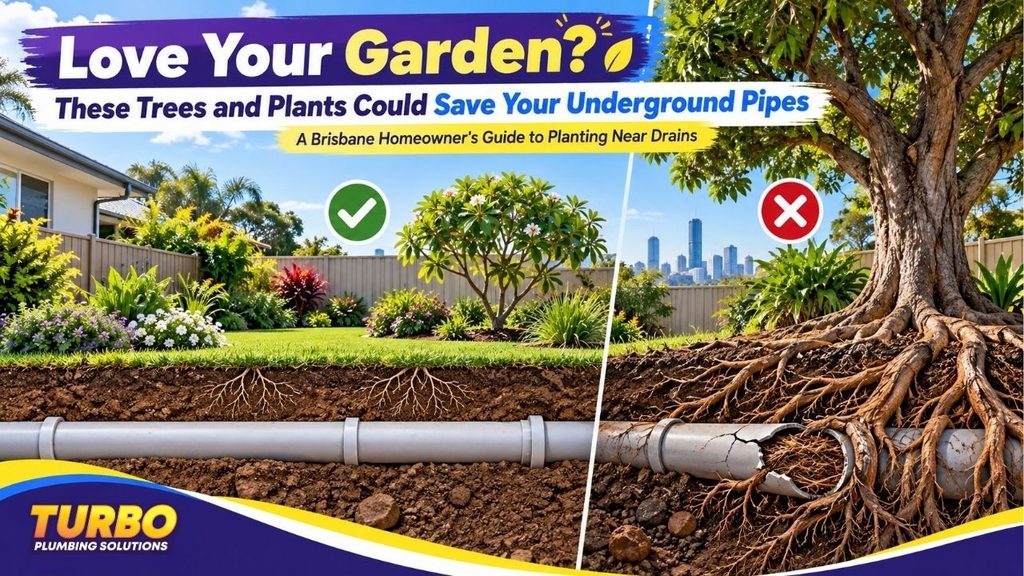
A Brisbane Homeowner’s Guide to Planting Near Drains
You have finally decided to give your backyard a makeover.
A beautiful shade tree. Some greenery along the fence. Maybe a few flowering shrubs to brighten things up.
You head to the garden centre, choose the plants you love and start imagining how good everything will look in a few years.
But there is one question most homeowners forget to ask.
What is growing underneath all of that?
Because while your new garden might look fantastic above ground, the wrong plants in the wrong places can create serious problems for the pipes underneath.
And the interesting part?
You do not have to give up having a beautiful garden just to protect your plumbing.
You simply need to make smarter planting decisions.
Why Do Tree Roots Love Your Underground Pipes?
Tree roots are constantly searching for moisture, oxygen and nutrients.
And underground wastewater pipes can provide an attractive environment.
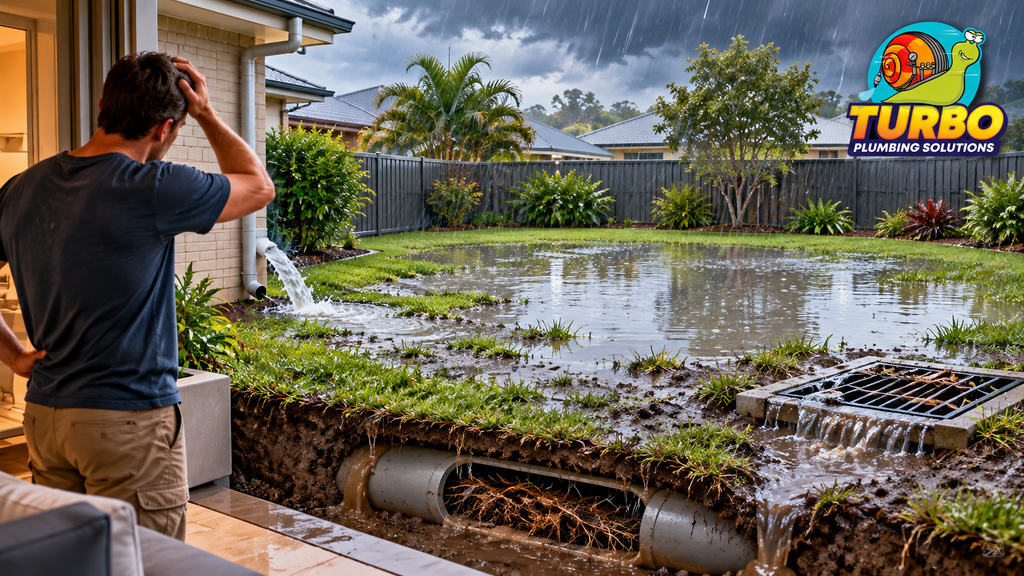
If a pipe has a small crack, damaged joint or opening, fine roots may find their way inside.
Once established, those roots can continue growing, catching debris and restricting the flow of wastewater.
Over time, a small intrusion can develop into a significant blockage.
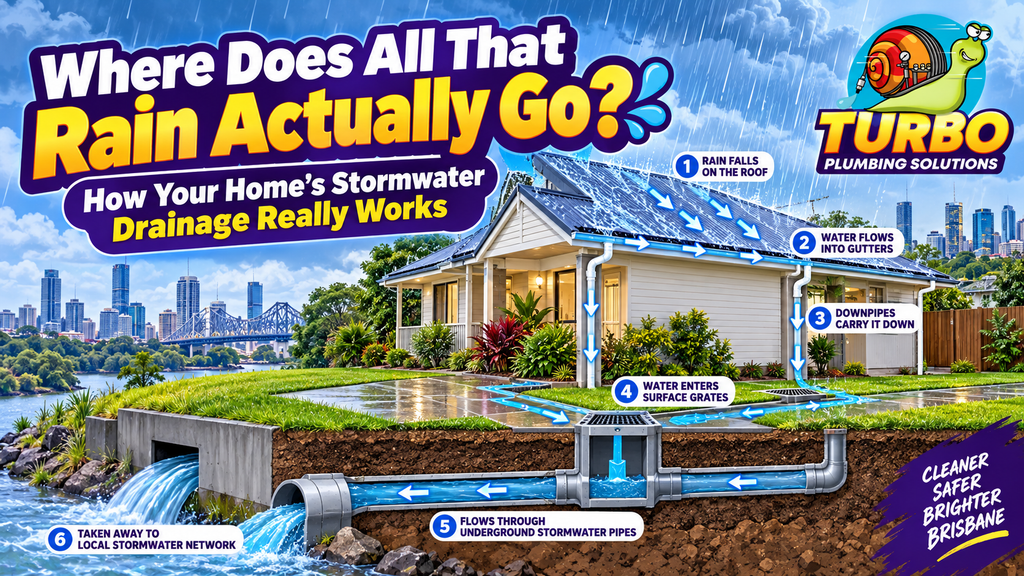
The same principle can affect damaged stormwater pipes.
But here is something worth understanding.
Trees do not necessarily break into perfectly sound pipes just because they are nearby.
Existing weaknesses in pipework often provide the opportunity for roots to enter.
That is why both the condition of your drainage and your choice of plants matter.
So What Should You Actually Plant Near Your Pipes?
This is the question many homeowners overlook.
Avoiding large trees with aggressive root systems is a good start, but that does not mean leaving the entire area empty.
Depending on the location of your pipes, the available space and any access restrictions, smaller plants with less extensive root systems may be more appropriate.
Here are a few options worth discussing with a local horticultural specialist.
1. Native Violet
If you want something low growing and attractive, native violet can be worth considering.
It is a spreading groundcover that can work well in suitable shaded garden areas.
Because it stays low to the ground, it can be a more practical landscaping choice than a large tree in areas where underground services are present.
However, its suitability still depends on the pipe location and any access requirements.
2. Dichondra
Dichondra is another low growing groundcover that can create a soft green appearance around garden spaces.
It is an option for homeowners who want greenery without planting a substantial tree or large shrub.
It can be particularly useful where the goal is simply to cover exposed soil and create a tidy garden finish.
3. Lawn Grasses
Sometimes the simplest option is also the most practical.
Lawn varieties such as couch, buffalo and zoysia can be suitable choices for open garden areas, depending on the sunlight, soil and maintenance requirements.
They generally have less extensive root systems than large trees.
However, pipe access points and utility easements must still remain accessible.
4. Lemon Myrtle
Want something more interesting than ordinary lawn?
Lemon myrtle is one Australian native worth discussing with a nursery when planning a garden.
It offers attractive foliage and fragrant leaves, making it a popular choice for suitable landscapes.
It is also among the less invasive tree options identified by South East Queensland’s Urban Utilities.
But remember, lemon myrtle can grow into a substantial tree.
That means it still needs appropriate space and should not automatically be planted directly over underground pipes.
5. Native Gardenia
Native gardenia is another option identified by Urban Utilities as having less invasive roots than some more problematic tree species.
It can provide an attractive addition to a suitable garden.
However, its mature size, growing conditions and distance from underground services still need consideration.
The important takeaway is that no plant should be treated as completely root safe in every situation.
A suitable plant in one backyard might be inappropriate in another.
What About the Trees You Should Avoid?
Some trees are particularly challenging around underground drainage.
Large fig trees are a well known example.
Their extensive root systems can spread well beyond the visible canopy.
Certain paperbarks and bottlebrushes can also be problematic because of their tendency to seek moisture.
This does not mean these trees are bad plants.
Many are valuable parts of Australian landscapes.
It simply means they need the right location.
A beautiful tree planted too close to vulnerable underground pipework can become a very expensive landscaping decision.
How Far Should Trees Be From Underground Pipes?
Here is where homeowners need to be careful.
There is no single planting distance that makes every tree safe around every underground pipe.
The appropriate distance depends on several factors, including:
- The tree species and its mature size
- The expected root spread
- The depth and location of underground pipes
- The type and condition of the pipework
- Soil conditions and available moisture
- Easements and access requirements
Some Australian water authorities recommend keeping trees at least three metres from underground pipes as a general precaution.
However, larger or more aggressive species may require substantially greater separation.
And some infrastructure corridors have specific restrictions on planting.
So rather than treating three metres as a universal rule, think of it as a reminder to check the requirements for your particular property.
Before You Plant Anything, Find Your Pipes
This might be the most important part of the entire article.
Most homeowners know where their garden beds are going.
Far fewer know exactly where their underground drainage runs.
And that can create problems before the first tree even goes into the ground.
Your property may contain underground sewer pipes, stormwater drains, water supply lines and other services.
Before planting trees or undertaking significant landscaping, check available drainage plans and underground service information.
Before You Dig Australia can help identify registered underground utility infrastructure.
However, it may not show every private pipe on your property.
If you are uncertain about the location or condition of private drainage, a licensed plumber can help investigate.
Knowing where your pipes are gives you a much better starting point for planning the garden.
Can Root Barriers Protect Your Pipes?
Root barriers are sometimes used to help direct root growth away from underground infrastructure.
They can be useful in appropriate situations.
But they are not a magic solution.
A root barrier does not automatically make a large, moisture seeking tree suitable for planting beside a sewer line.
Its effectiveness depends on the design, placement, installation and growing conditions.
The better approach is to choose a suitable plant and location first, then consider whether additional root management measures are appropriate.
What If You Already Have Large Trees Near Your Drains?
Do not panic.
Having an established tree near your underground drainage does not automatically mean the pipes are damaged.
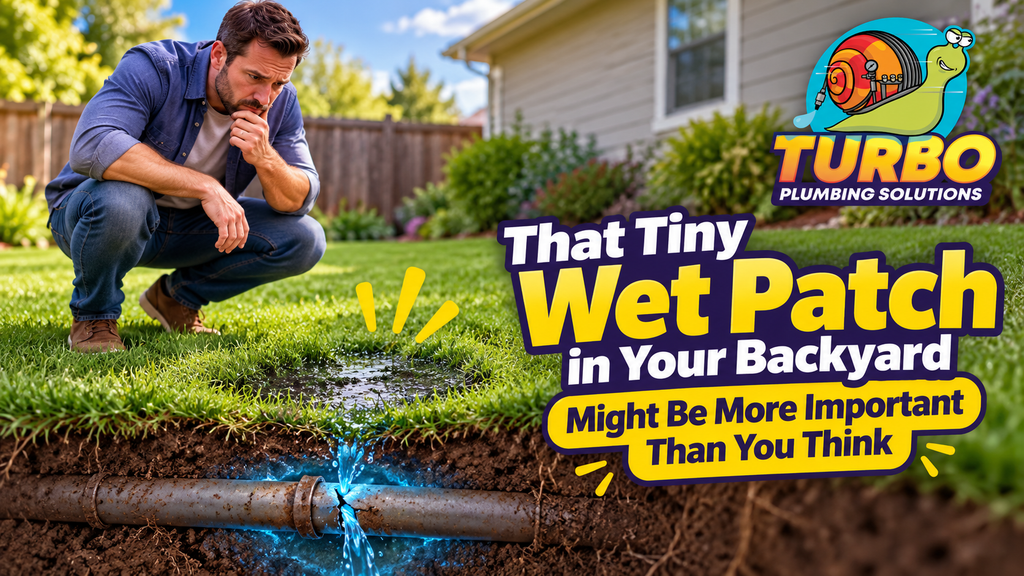
But if you have recurring blockages, slow drainage or unusual gurgling sounds, it may be worth investigating.
One of the most useful tools for this is a CCTV drain inspection.
A drain camera allows a plumber to look inside the pipe and check for root intrusion, damage and other restrictions.
This can help identify whether tree roots are actually involved rather than assuming the nearest tree is responsible.
And importantly, it helps determine what should happen next.
Because removing a tree will not necessarily repair an already damaged pipe.
Your Garden and Your Plumbing Can Get Along
A beautiful garden and a reliable drainage system do not have to be enemies.
You can have shade.
You can have greenery.
You can have flowering plants and attractive landscaping.
But good garden design should consider more than what everything looks like above ground.
It should also consider what is happening underneath.
Choosing suitable plants, allowing enough space for mature growth and understanding where underground services are located can help reduce the risk of future drainage problems.
And if you already suspect roots are causing recurring blockages, getting the pipes inspected can help you make a more informed decision.
The Best Garden Is One That Doesn’t Surprise You Underground
A tree that looks perfect today might be much larger in ten years.
That tiny shrub could eventually occupy far more space than you expected.
And the underground pipes you never thought about could end up sitting right in the path of growing roots.
So before you plant your next tree, take a moment to think beyond the garden design.
Choose the right plant. Give it the right space. Know where your pipes are.
Your future backyard and your plumbing will be better off for it.
Turbo Plumbing Solutions proudly services Albany Creek, Brendale, Eatons Hill, Strathpine, Warner, North Lakes, Bridgeman Downs, Griffin, Aspley, Everton Park and surrounding Brisbane Northside suburbs.
If you are experiencing recurring drain blockages, suspect tree roots inside your pipes or want to understand the condition of your underground drainage before landscaping, our team can help.
For your Plumbing needs:
🌐 https://www.turboplumbingsolutions.com.au/book/
☎️ 07 3130 5976
Access our All-in-One Smartlink: https://t.mtrbio.com/turbo-plumbing-solutions
Visit our all-new TPS Portal:
Portal.turboplumbingsolutions.com.au