September 2026
When rain starts.
Within minutes, thousands of litres of water can be landing across your roof, driveway, patio and backyard.
But have you ever stopped to think about where all that water actually goes?
Most of the time, you probably do not.
And that is exactly how a good stormwater drainage system should work.
It quietly collects rainwater, moves it away from your home and helps prevent your property from turning into a swimming pool every time Brisbane gets a serious downpour.
But underneath your lawn, driveway and garden is a drainage system doing much more work than most homeowners realise.
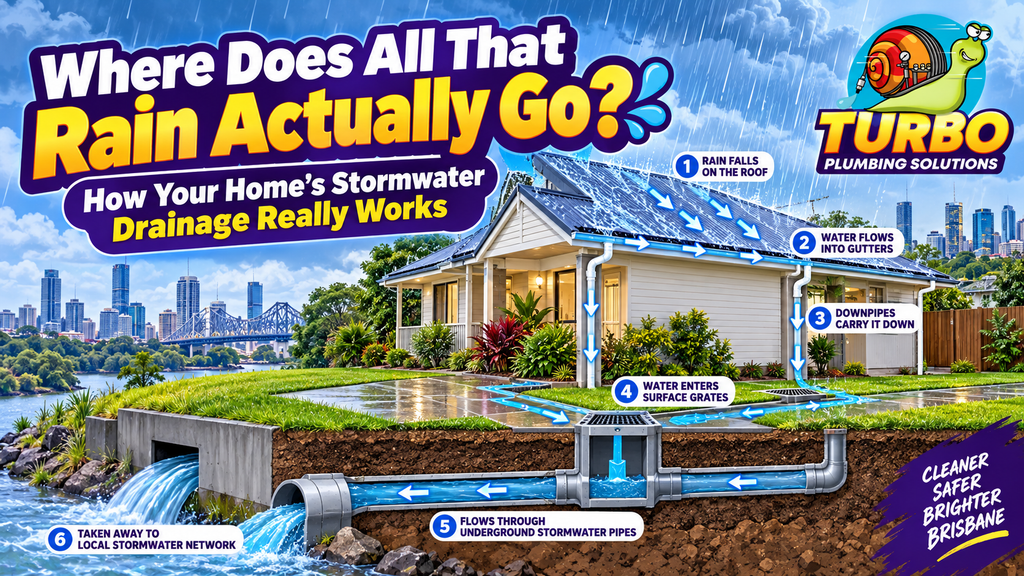
Here is the journey your rainwater takes.
Step One: Rain Hits Your Roof
Let us start at the top.
Your roof catches an enormous amount of water during heavy rain.
Instead of allowing that water to simply pour off every edge of the house, your gutters collect it and direct it towards your downpipes.
Think of your roof and gutters as the first collection point in your stormwater system.
When gutters become packed with leaves, dirt and debris, water may struggle to reach the downpipes properly.
That is when you can start seeing gutters overflowing during heavy rain.
But getting water off the roof is only the beginning.
Step Two: The Downpipes Take Over
Once rainwater reaches your downpipes, it needs somewhere to go.
Downpipes carry water from the gutters towards the property’s stormwater drainage system.
In many homes, that means connecting into underground stormwater pipes.
And this is where the part of the system you cannot see begins.
Those underground pipes need to move a potentially large amount of water away from the property quickly.
When everything is working correctly, you barely notice them.
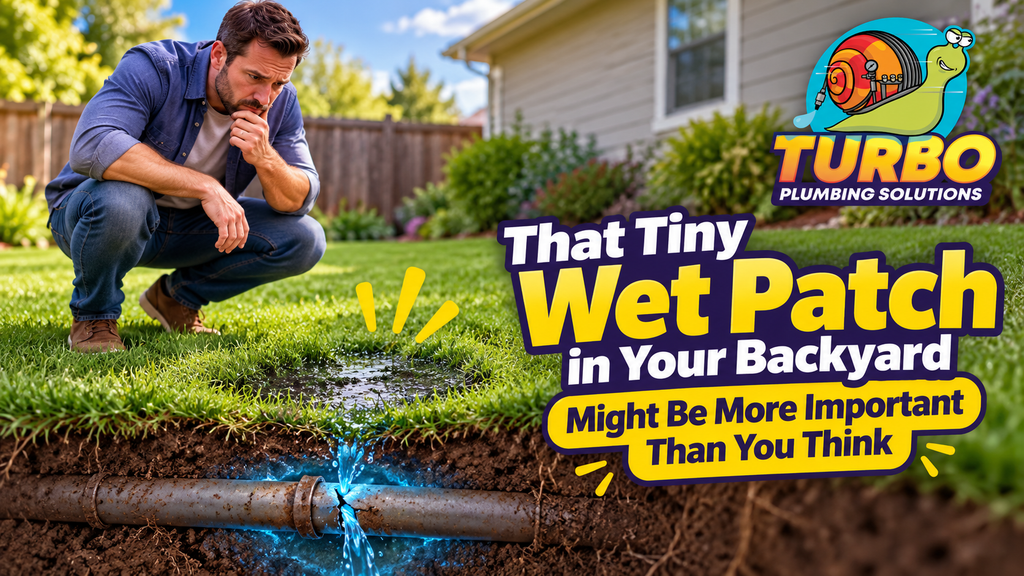
When something is wrong, however, the backyard can start giving you clues.
Step Three: Your Yard Has Its Own Collection Points
Your roof is not the only place collecting rain.
Water also lands on driveways, patios, paths and gardens.
Some of it naturally soaks into the ground.
But hard surfaces such as concrete cannot absorb water in the same way soil can.
That water becomes runoff.
Depending on the design of the property, grated drains, channels and stormwater pits can collect this runoff and direct it into the drainage system.
Stormwater pits are particularly useful because they provide a collection point before water continues through underground pipes.
The idea is simple.
Catch the water. Control where it goes. Move it away safely.
Step Four: Gravity Does More Work Than You Think
There usually is not a giant pump underneath your backyard pushing stormwater away.
Much of the system relies on something much simpler.
Gravity.
Stormwater pipes are installed with the correct fall so water naturally travels in the intended direction.
That slope matters.
If sections of pipe move, sink, become damaged or were not installed correctly, water may not flow as efficiently.
Debris can begin settling in low areas.
Water can sit inside sections of pipe.
And during heavy rain, the system may struggle to move water quickly enough.
You might not notice any of this during light rain.
A Brisbane storm can tell a very different story.
Step Five: The Water Has to Go Somewhere
Your property’s stormwater system ultimately needs an appropriate place to discharge the water it collects.
Depending on the property and local infrastructure, stormwater may eventually connect with Council drainage infrastructure or another approved point of discharge.
From there, the broader stormwater network helps carry runoff through drains, pipes, channels and waterways.
This is also why stormwater drainage is different from the wastewater leaving your toilet, shower or kitchen.
They serve very different purposes.
Your sewer system deals with wastewater from inside the home.
Your stormwater system deals primarily with rain.
Keeping those systems correctly separated matters.
So Where Does Stormwater Eventually End Up?
This is the part many homeowners do not realise.
Stormwater does not simply disappear when it enters the grate outside.
It continues through a much larger drainage network.
Water can eventually travel through pipes, channels and creeks before reaching local waterways.
That is one reason what enters a stormwater drain matters.
Paint, chemicals, oils, rubbish and other contaminants should never simply be washed down outdoor stormwater drains.
The grate outside your home is not a magic hole.
It is part of a much bigger environmental system.
What Happens When Something Gets Blocked?
Now imagine that entire journey again.
Rain hits the roof.
The gutter catches it.
The downpipe carries it underground.
The underground pipe tries to move it away.
Except somewhere along the way there is a blockage.
Maybe leaves and sediment have accumulated.
Maybe tree roots have entered a damaged section of pipe.
Maybe part of the underground drainage has deteriorated.
The rain keeps falling.
But the water cannot move through the system quickly enough.
So it starts looking for somewhere else to go.
That might mean overflowing gutters.
Water coming back through stormwater grates.
Large puddles around the yard.
Water sitting around the driveway.
Or sections of the property suddenly looking more like a pond.
The blockage might have been developing quietly for months.
The storm simply revealed it.
Your Stormwater System Usually Warns You
You do not always need to wait for backyard flooding before noticing a problem.
There can be smaller warning signs.
Watch for:
Water pooling around stormwater grates
Gutters overflowing even when they appear reasonably clean
Water sitting in the yard long after the rain stops
Gurgling or unusual sounds around outdoor drains
Stormwater pits that remain unusually full
Recurring wet or soggy areas
Water flowing towards the house instead of away from it
The same section of the property flooding every time there is heavy rain
These signs do not automatically tell you what the problem is.
But they can tell you the system deserves a closer look.
Why Brisbane Homes Need Working Stormwater Drainage
Brisbane weather can change quickly.
A stormwater system might barely have anything to do for weeks.
Then a heavy downpour arrives and suddenly it needs to move a huge amount of water in a short period.
That is when good drainage matters.
Your stormwater system helps move rainwater away from areas where it could otherwise contribute to flooding, erosion and property damage.
And because so much of the system is underground, problems can remain hidden until the system is placed under pressure.
The Best Time to Think About Stormwater Is When It Is Not Raining
Nobody wants to stand outside during a Brisbane storm watching water rise around the backyard and wondering:
Where is all this water supposed to go?
That is a question worth answering before the rain arrives.
Keeping gutters and visible grates clear is a useful part of home maintenance.
But if your property regularly experiences pooling water, slow stormwater drainage or flooding during heavy rain, the problem may be further underground.
Professional inspection can help determine what is actually happening instead of simply guessing from what you can see at the surface.
Sometimes We Need to See What Is Happening Underground
This is where modern plumbing equipment can make a big difference.
If there is a suspected problem inside an underground stormwater line, a CCTV drain inspection can allow a plumber to investigate the condition of the pipe.
It can help identify issues such as blockages, tree root intrusion, damaged sections of pipe or other restrictions.
If a blockage needs clearing, professional drain cleaning equipment can then be used depending on the cause and condition of the system.
Instead of digging first and asking questions later, the goal is to understand what is actually happening.
Your Stormwater System Is Quiet Until It Isn’t
Most homeowners never think about stormwater drainage when it is working properly.
And that is a good thing.
Rain falls.
Water disappears.
Life continues.
But when the system stops doing its job properly, it can become very noticeable very quickly.
As Brisbane moves closer to storm season, take a walk around your property after the next decent rainfall.
Look at where the water goes.
See how quickly it disappears.
Check whether the same areas continue to pool.
Your property might already be showing you how well its stormwater drainage is working.
Turbo Plumbing Solutions proudly services Albany Creek, Brendale, Eatons Hill, Strathpine, Warner, North Lakes, Bridgeman Downs, Griffin, Aspley, Everton Park and surrounding Brisbane Northside suburbs.
If your stormwater drains are slow, overflowing or simply not coping when Brisbane’s rain arrives, it may be worth finding out what is happening underground before the next big storm puts them to the test.
If something around your home is leaking, gurgling, draining slowly or simply does not seem right, get it professionally checked.
For your Plumbing needs:
🌐 https://www.turboplumbingsolutions.com.au/book/
☎️ 07 3130 5976
Access our All-in-One Smartlink: https://t.mtrbio.com/turbo-plumbing-solutions
Visit our all-new TPS Portal:
Portal.turboplumbingsolutions.com.au